History of Decorative Painting
...and My Journey Along With It.
Let's chat about the history of decorative painting. If you've ever picked up a paintbrush and transformed an ordinary box, chair, tray, or canvas into something beautiful, you've become part of a tradition that stretches back hundreds of years. Decorative painting, and its close cousin, tole painting, have always been about adding beauty to everyday life.
I've been fortunate enough to be part of this wonderful community since 1991. Looking back, I realize I joined during what many of us now think of as the "golden age" of decorative painting. I vividly remember the buzz and excitement I felt when rubbing shoulders with wonderful guest teachers or as we called them “Big Brushes”.
But before I tell you my story, let's take a quick trip back to where it all began.


Where It All Started
Decorative painting has been around for centuries. I remember flipping through old National Geographic magazines and stopping to admire photos of beautifully painted furniture and everyday objects from ancient civilizations.
Even then, I was drawn to the idea that people took the time to add beauty to the things they used every day. Years later, when I discovered decorative painting myself, those images came back to me.
Tole painting, however, has a more specific origin.
The word "tole" comes from the French phrase "tôle peinte," meaning painted sheet metal. During the 17th and 18th centuries, European craftsmen decorated everyday metalware like trays, tea caddies, candle holders, and serving pieces with colourful flowers, fruit, landscapes, and ornate borders. These practical household items became little works of art.
As European immigrants settled in North America, they brought these traditions with them. And naturally, decorative painting gradually expanded beyond metal to include wood, glass, tin, fabric, walls, furniture, and just about any surface that would hold paint. I love finding some of these treasures in antique shops and rummage sales.
By the late twentieth century, decorative painting had grown into an international hobby enjoyed by hundreds of thousands of painters.
Finding My Paintbrush
Before I even knew about the history of decorative painting, I discovered this style of painting back in 1991 after my husband and I moved to the Ottawa area of Ontario.
I've always been a crafter at heart and loved wandering through craft shows and farmers' markets, admiring all the handmade treasures. One day, I stopped at a booth with a sign that read, "The Tole Booth." The table was filled with beautifully hand-painted pieces, but it was another sign that really caught my attention. It said, "Sure you could paint that yourself, but will you?"
That one simple question got to me. And that’s when I decided I was going to learn how to paint like that. What began as a spark of curiosity quickly turned into a lifelong passion.
There was something incredibly satisfying about learning brush control, colour blending, floating, dry brushing, and all the techniques that decorative painters know and love. Every project taught me something new, and every class introduced me to people who shared the same excitement for putting paint to wood.
One of the places that shaped me most was The Painted Pony, owned by the late Sally Soobrian.
The Painted Pony Years
If you painted in the Ottawa area during the 1990s, chances are you remember The Painted Pony.
It wasn't just a paint store. It was a destination.
The shelves were filled with every paint colour, brush, surface, pattern packet, stencil, and tool a decorative painter could imagine. Walking through the doors felt a little like walking into a candy store. Except everything was covered in beautiful painted samples instead of sugar.
The classroom was always buzzing with activity. Twenty students in a class was perfectly normal, and there was always another workshop coming up.
I learned so much there that before long I was invited to become one of the instructors. I taught Beginner Levels 1 and 2, Intermediate Level, and Advanced Level classes, along with regular workshops. It was wonderful seeing students coming back time and again. Best of all was seeing my students’ faces light up when they finally understood how to do floating. And it’s why teaching matters so much to me.
Teaching taught me just as much as painting did. Explaining techniques helped me understand them more deeply, and watching students discover their own abilities remains one of the greatest rewards of my career.
The Convention Years
If there was one thing every decorative painter looked forward to, it was convention season.
Conventions were like family reunions mixed with summer camp and art school.
You could spend an entire weekend painting from morning until evening, surrounded by people who understood exactly why you owned fifty paintbrushes and needed just one more tube of paint.
I attended Kaswood conventions where I had the privilege of learning from incredible artists including Sue Bowers, Tracy Moreau, Priscilla Hauser, Shara Reiner, Arlene Steinberg, and Lydia Steeves.
One teacher I especially remember is Linda Wise. I was struggling with my floating technique. I could make the stroke, but I wasn't getting consistent results and I couldn't figure out why.
Linda showed me the importance of using a larger brush and explained that the water in the brush is the fuel that carries the acrylic paint. When the balance of water and paint is right, the brush glides across the surface with so much more control. It sounds simple, but it takes time and practice to develop that feel. Understanding *why* it worked changed the way I painted, and it later shaped the way I teach my own students.
I also attended the Society of Decorative Painters (SDP) conventions, which were among the largest gatherings of decorative painters anywhere in the world. There I painted with and learned from internationally respected artists including Jo Sonja Jansen, Donna Dewberry, Maxine Thomas, Susan Scheewe, Debby Forshey-Choma, Brenda Stewart, Judy Diephouse, Cheri Rol, and Karl-Heinz Meschbach.
Every teacher left their mark on me.
Some taught beautiful brushwork. Others taught composition, colour theory, realism, or confidence. I don't think any painter ever leaves a convention exactly the same person who walked in.
I was also honoured to teach a couple of seminars for OVDA, (Ottawa Valley Decorative Artists), giving me the opportunity to share my own techniques with fellow painters.
The Decorative Painting Boom
The years from the late 1980s through the early 2000s were truly special. I still remember the long lineups that formed hours before the shops opened. People chatting in line, visibly eager to see the new workshops schedule and peering in the window to see the beautifully painted projects displayed at the front of the store.
Painting weekends became social events where friendships were built one brushstroke at a time. We painted together every chance we got. We exchanged ideas, admired one another's projects, laughed through our mistakes, and celebrated every success.
Looking back, I think the greatest gift wasn't just learning to paint. It was belonging to such a welcoming community.
The Changing Landscape
Like every creative industry, decorative painting evolved.
Around the early 2000s, scrapbooking exploded in popularity. Craft stores began dedicating more shelf space to paper crafting, and many painters discovered another creative outlet. Gradually, decorative painting stores began seeing fewer customers.
One by one, many beloved paint shops closed their doors.
The community remained, but it became more spread out.
Then came the COVID-19 pandemic.
Almost overnight, any remaining opportunities to gather and paint in person disappeared. Shops that had survived for decades found it increasingly difficult to continue operating.
Like so many teachers, artists adapted.
Online classes, downloadable e-patterns, social media, Zoom workshops, and video instruction became the new classroom.
While nothing completely replaces painting beside friends around a table, technology has allowed painters from around the world to learn together without leaving home.
Looking Ahead
After more than three decades of painting, I'm often asked if decorative painting still has a future. My answer is always the same: absolutely.
In fact, I believe we're entering a time when handmade art will be appreciated more than ever. As artificial intelligence makes it possible to create almost anything with the click of a button, the value of something lovingly created by hand only grows. I've watched decorative painters spend hours creating a special gift for someone they love, and I've heard the stories afterward. Those gifts are treasured for years, not because they're flawless, but because every brushstroke came from someone who cared.
Decorative painting has never stood still. It has continually evolved alongside changing tastes, new materials, and new technology.
The skills we develop; brush control, colour harmony, composition, shading, highlighting, design, and creativity are incredibly portable. They transfer beautifully into mixed media, acrylic fine art, murals, furniture restoration, journaling, illustration, and countless other creative pursuits.
People will always want beautiful homes and meaningful handmade objects.
In fact, I believe handcrafted art will become even more valuable as artificial intelligence creates more digital imagery. The more technology fills our lives, the more people will appreciate something created by human hands.
I also believe our future includes the best of both worlds.
We'll continue returning to classrooms, retreats, and painting events because nothing replaces creating together in person. At the same time, online learning has opened doors that simply didn't exist thirty years ago, allowing us to connect with artists across the globe.
Decorative painting has survived changing fashions, economic shifts, and technological revolutions because it speaks to something timeless: our desire to create beauty, tell stories, and leave a personal mark on the world.
As for me, I'm still learning. Every painting teaches me something new, and every student reminds me why I fell in love with decorative painting all those years ago.
I can't wait to see where the next brushstroke takes us.

Cheryl Poulin, CPC, has been helping decorative painters of all levels grow their acrylic painting skills since 1993. She has taught thousands of students, published 50+ instructional packets and videos, and helped revive interest in the decorative art form with a beginner painting program using her step-by-step Earmark Studio Method.
Cheryl’s work has appeared in publications such as: The Decorative Painter, PaintWorks, and Tole World. Cheryl provides your-decorative-painting-resource.com as a free resource. She’s happiest when she sees her students succeed. Cheryl relaxes with a brush in hand, painting, doodling, and creating.
Grow Your Painting Skills With Me
You Can Paint These Trees and More

Get Your Video Course Now
Introductory Price
Save 30% plus
a Money Back Guarantee


You Can Paint These Trees and More
Get Your Video Course Now
Introductory Price
Save 30% plus
a Money Back Guarantee
Recent Articles


-
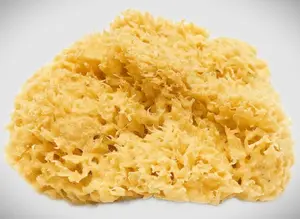
Learn sponge painting techniques to create textured backgrounds.s.
Sep 07, 26 03:21 PM
 Discover positive and negative sponge painting techniques. Use different kinds of sponges for mottling, marbling, and learn easy fixes when you make a mistake.
 -
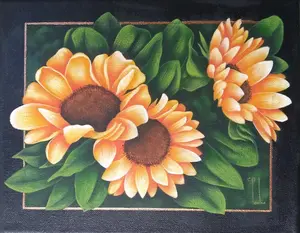
CBP0047 - Sunflower Folly Pattern Packet
Aug 30, 26 02:02 PM
 Increase your painting skills. Enjoy learning the wet dry brush technique in my CBP0047 - Sunflower Folly pattern packet.
 -
A decorative painting pattern guide helps you choose what to buy.
Aug 30, 26 09:13 AM
 Use Cheryl Poulin’s ultimate decorative painting pattern guide to discover how pattern packets work for beginners vs. advanced painters! Choose wisely.
 -
Learn how to use a liner brush for swirls and smooth curlicues.
Aug 22, 26 02:52 PM
 Ever painted a curlicue that suddenly turned into a skinny worm with a kinked body? I'll show you how to use a liner brush for swirls you'll be proud of.
 -
Ugly stage of a painting, it happens. Don't shelve your project yet.
Jul 19, 26 08:10 AM
 It's a frustrating thing but it's to be expected. The ugly stage of a painting simply means you're about halfway through your project. Take heart and keep going!
 -
is decorative painting still popular
Jul 06, 26 10:32 AM
 Hobbyists are asking, is decorative painting still popular? Yes but it has changed quite a bit.
 -
CBP0046 The Dance of the Dragonflies
Jun 20, 26 01:51 PM
CBP0046 The Dance of the Dragonflies provides a creative design for all painting skills including beginners.


Site Search
| site search by freefind | advanced |


You Can Paint These Trees and More
Get Your Video Course Now
Introductory Price
Save 30% plus
a Money Back Guarantee