Acrylic
Paint for Decorative Painting:
Does Quality Matter?
Have you ever found yourself struggling and getting frustrated with your acrylic paint?
You're following along with a video or working from a pattern packet, doing your very best to reproduce the brushstrokes being demonstrated. But somehow, your results look nothing like the ones on the screen.
The paint won't cover properly. Your beautiful, crisp brushstrokes turn into streaky, transparent smudges. Those lovely, vibrant colors dry dull and chalky.
And if you're just starting out, it's easy to wonder whether you have what it takes to learn this whole decorative painting thing.
Before you blame yourself, though, consider this. The problem might be your paint.
I know it's tempting to grab whatever acrylic paint is available at the local craft store, especially when you're trying to keep the cost of your hobby under control. After all, paint is paint, right?
Well, not exactly! Acrylic paints are formulated for different purposes, and those differences can have a big impact on how they perform under your brush.
Let's take a look at what you're actually paying for, why it matters, and how choosing the right paint can save you both money and frustration.
Not All Acrylic Paints Are Created Equal
At its simplest, acrylic paint contains pigment (the ingredient that gives it color), an acrylic binder (which holds the pigment together and helps it adhere to your surface), and other ingredients that influence its consistency, coverage, flow, and drying behavior.
The proportions and types of these ingredients vary from one product to another. That's why two bottles of blue paint can look similar on the shelf but behave quite differently on your palette.
In the decorative painting world, we can generally group the paints we're likely to use into three broad categories.
Budget Craft Paints
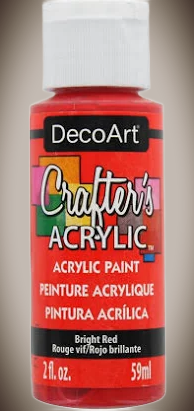
These are economical paints designed for general craft projects. DecoArt Crafter's Acrylic is one example.
They're useful for all sorts of crafting projects or kids’ activities where premium coverage and predictable brushwork aren't important. But if you're trying to float a smooth shadow or create a crisp, controlled stroke, you’ll be frustrated and disappointed.
Premium Craft Paints
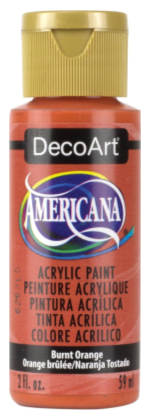
This is where my go-to paint, DecoArt Americana Acrylics, comes in.
Americana offers a useful balance of performance, availability, and price. It's the paint I use in my instructional videos and pattern packets, so when you're following along, you're working with the same product I'm using. And that matters!
A quick note about my paint recommendations: At the time of writing, I don't receive commissions, payments, free products, or other compensation from DecoArt. My recommendation of Americana Acrylics is based on my own experience using the paints in my decorative painting and teaching.
Artist-Grade Acrylic Paints
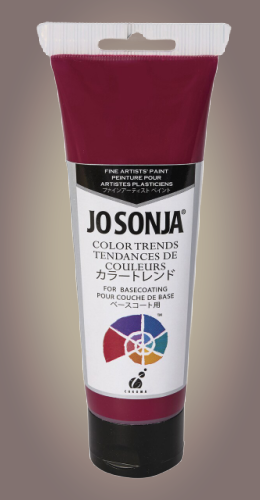
Artist-grade paints are formulated for artists who want exceptional performance and color characteristics. They often offer carefully selected pigments, strong color, and excellent working properties, although the results vary by color and product.
Chroma's Jo Sonja Artists' Colours is a line I absolutely adore painting with. Yummy sums it up for me!
Different paints have different strengths, and I certainly wouldn't suggest that everyone needs to switch to artist-grade products. But if you enjoy the way a particular paint handles, blends, and responds to your brush, that extra investment may be worthwhile.
The important thing is to understand what each paint can do and choose accordingly.
What Difference Does Paint Quality Make?
Let's look at three areas where your choice of paint can make a noticeable difference to your decorative painting.
1. Coverage and Layering
Have you ever painted a background, only to discover that you need coat after coat to get an even finish?
Some paints have less hiding power than others. The pigments used, their concentration, and the way the paint is formulated all influence how well a color covers the surface beneath it.
White, yellow, red, and other colors can be particularly challenging, depending on the pigments used. Even within the same brand, one color may cover beautifully while another needs a little extra help.
2. Color Mixing
Some pigments mix more predictably than others. When you combine colors with different pigment properties, you can end up with a duller result than you expected.
If you’ve ever tried to mix a beautiful purple using red and blue but ended up with something that looked suspiciously like mud, you know exactly what I’m talking about.
3. Brushwork, Blending, and Control
Decorative painting relies on techniques such as floating color, double-loading a brush, blending, and creating smooth, controlled strokes.
If your paint is too thin for the job, you’ll struggle to get the coverage or control you want. If it's too thick, it may drag or resist the movement of your brush. Some formulas also dry more quickly than others, making certain blending techniques more challenging.
Of course, consistency can be adjusted to some extent through technique and the appropriate use of water or other mediums. But starting with a paint that suits the job gives you a much better chance of achieving the result you're after.
A Little Behind-the-Scenes Paint Talk
Have you noticed that a manufacturer’s newer paint bottle seems to behave differently than the exact same older paint bottle? Maybe it feels thinner, flows differently, or doesn't seem to cover quite as well as it used to.
Paint formulas often change over time, and manufacturing conditions can change, too. Raw material availability, ingredient costs, supplier changes, and reformulation can all affect how a product is made.
But a change in consistency doesn't automatically mean a manufacturer has cut corners. Nor can we assume that supply chain issues are responsible for every difference we notice.
Sometimes the explanation is much simpler. The bottle may have been stored differently, the paint may need thorough mixing, or we're working with a color that has different properties from the one we used previously.
But if the paint seems unusually thin, lumpy, separated, or difficult to use after mixing, check the manufacturer's guidance or contact the company. You don't have to assume that every disappointing bottle is something you simply need to work around.
Choosing Paint Wisely
So, what's the takeaway?
You don't always need the most expensive paint on the shelf, and for sure the cheapest bottle isn't likely your best bargain.
And if you're following one of my videos or pattern packets, most of the time I’m using DecoArt Americana Acrylics. If you pick the same paints, it will give you a consistent starting point as you learn. Your results should look pretty close to mine.


Your second block of text...

Cheryl Poulin, CPC, has been helping decorative painters of all levels grow their acrylic painting skills since 1993. She has taught thousands of students, published 50+ instructional packets and videos, and helped revive interest in the decorative art form with a beginner painting program using her step-by-step Earmark Studio Method.
Cheryl’s work has appeared in publications such as: The Decorative Painter, PaintWorks, and Tole World. Cheryl provides your-decorative-painting-resource.com as a free resource. She’s happiest when she sees her students succeed. Cheryl relaxes with a brush in hand, painting, doodling, and creating.
Grow Your Painting Skills With Me
You Can Paint These Trees and More

Get Your Video Course Now
Introductory Price
Save 30% plus
a Money Back Guarantee



You Can Paint These Trees and More
Get Your Video Course Now
Introductory Price
Save 30% plus
a Money Back Guarantee
Recent Articles


-
Acrylic Paint for Decorative Painting: Selection Guide
Oct 24, 26 09:35 AM
 Struggling with streaky coverage or dull colors? Learn how to choose the right acrylic paint for decorative painting to save time, money, and frustration.
-
CBP0048 - The Promise of Autumn Pattern Packet
Sep 28, 26 04:04 PM
 Enjoy this quick and fun project featuring background creation with alcohol
-
How to Paint Galvanized Metal with Acrylics: Complete Prep Guide
Sep 28, 26 01:25 PM
 Stop acrylic paint peeling off galvanized steel! 5-step prep routine decorative painters use to make art stick and how to paint galvanized metal with acrylics.
-
Learn sponge painting techniques to create textured backgrounds.s.
Sep 07, 26 03:21 PM
 Discover positive and negative sponge painting techniques. Use different kinds of sponges for mottling, marbling, and learn easy fixes when you make a mistake.
-
CBP0047 - Sunflower Folly Pattern Packet
Aug 30, 26 02:02 PM
 Increase your painting skills. Enjoy learning the wet dry brush technique in my CBP0047 - Sunflower Folly pattern packet.
-
A decorative painting pattern guide helps you choose what to buy.
Aug 30, 26 09:13 AM
 Use Cheryl Poulin’s ultimate decorative painting pattern guide to discover how pattern packets work for beginners vs. advanced painters! Choose wisely.
-
Learn how to use a liner brush for swirls and smooth curlicues.
Aug 22, 26 02:52 PM
 Ever painted a curlicue that suddenly turned into a skinny worm with a kinked body? I'll show you how to use a liner brush for swirls you'll be proud of.


Site Search
| site search by freefind | advanced |


You Can Paint These Trees and More
Get Your Video Course Now
Introductory Price
Save 30% plus
a Money Back Guarantee