- Home
- Vision Board
Vision Board
A Creative Way to Explore Your Dreams and Goals
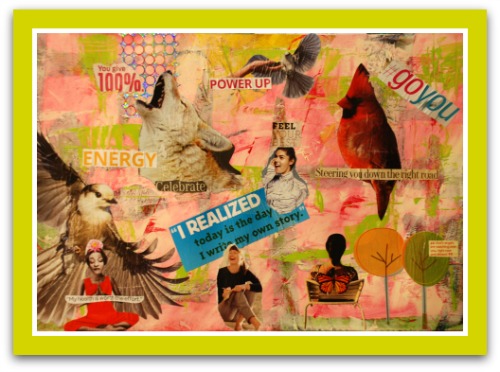
A vision board, in my humble opinion, is one of the most powerful, hands-on tools a painter or creative mind can use to bring their future goals to life.
Traditional goal-setting usually relies on boring, linear lists, and mapping out milestones and timelines. And that’s great in business or for the person who lives a more structured lifestyle.
For painters and other creative folks like us, our minds are much more naturally stimulated by color, texture, and action.
By using the crafting supplies and painting knowledge you already have, you can transform abstract dreams and goals into a beautiful, visual roadmap that keeps you inspired every single day.
On this page, I’m sharing my personal, painterly approach to building a mixed-media vision board. Whether you want to explore a new career path, focus on your health, or carve out more time for your art, this simple step-by-step tutorial will help you clear the clutter in your mind and manifest what you truly want.
What Is a Vision Board
(And Why Visuals Work)

A vision board is a very personal collage of images, photographs, colors, textures, and words that represent your desired future.
It’s much more than a simple craft project; it's a proven psychological tool. Athletes, performers, and successful entrepreneurs use visualization techniques every day to mentally rehearse crossing the finish line or nailing a major performance.
By creating a physical board and displaying it somewhere you see it daily, you can trigger that same mental focus. It acts as a constant, gentle reminder to your brain to look for opportunities that align with your deepest aspirations.
Who Can Benefit
from a Creative Vision Board?
If you feel like you’re running around in circles, repeating old patterns, or feeling disconnected from your creative spark, a vision board resets your direction. It’s the perfect exercise if you want to:
Prioritize Wellness: Visualize a healthier, more active, and vibrant life.
Grow Creatively: Dedicate more guilt-free time to your studio, sketching, doodling, or painting.
Shake Up Your Environment: Imagine your dream home, a redecorated studio space, or exotic travel destinations.
Build a Business: See yourself selling your art or starting a creative business.
The Hardest Part:
Learning What You Truly Want
Before you reach for the scissors and glue, you have to step up to the real work. The secret to a successful vision board is learning to identify what you truly want versus what you think you should want.
If making gobs of money isn't what sets your heart on fire you, don't clip out images of luxury items just because society says this is what success looks like. If what your heart really craves is quiet mornings with a journal, a paintbrush and a cup of tea, well then focus entirely on that.
Give yourself permission to ignore everyone else’s expectations. Write down a messy list of raw, honest desires. Don't worry about how you’ll achieve them yet… for now, just give yourself permission to dream. Go big!
Creative Resource: In her book, *Visioning: Ten Steps to Designing the Life of Your Dreams*, Lucia Capacchione, Ph.D., ATR, outlines a beautiful 10-step framework for exploring creative chaos and finding order in your designs. I highly recommend it if you want to dive deeper into the therapeutic side of visual goal-setting.
How to Create a Mixed-Media Vision Board
Here We go!
Like all projects, you need to gather up your supplies. You likely have most of these things on hand.
- Sharp straight scissors and detail scissors
- White glue, I use Mod Podge Matte finish
- 3/4-inch flat brush
- water basin
- paper towel
- watercolor paper about 18 x 24, I like Strathmore 300 Series Watercolor Pad
- lots of magazines that have loads of images - fashion mags, National Geographic, travel brochures, food mags, pretty much whatever is of interest to you. Don't forget your own snapshots!
- acrylic paints
- permanent markers
- colored pencils
Find an area where you can lay
out your stuff and have room to work.
The space should be well lit.
Cutting is messy so be sure to have a garbage can or bag nearby.
Step 1: Collect and Theme Your Images
Start flipping through your magazines and cut out anything that flashes a spark of joy or peace inside you.
Don't censor yourself: If an image of a vibrant red pair of gloves appeals to you, cut it out even if you don't know why yet.
Organize the chaos: Once you have a large pile, sort your cut-outs into labeled file folders like "Health," "Studio Time," or "Travel." This keeps your thoughts organized and allows you to work on one focused board at a time or build a master board seamlessly.
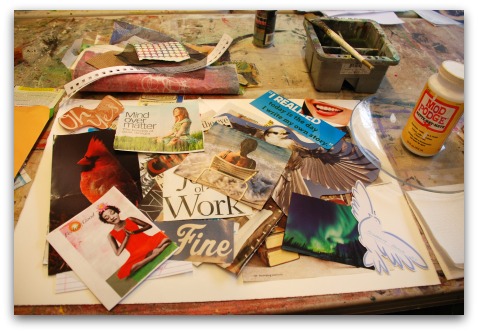 Magazine cut outs, watercolor paper, glue, water basin and paper towel. All set!
Step 2: Paint a Cohesive Background
Get rid of that stark white paper, it will calm your mind! This is where you can let your inner decorative painter shine. You can use a classic slip-slap method to blend colors across the page, or glue down scrapbooking and handmade papers first.
For my board shown below, I applied layers of handmade papers followed by soft washes of red acrylic paint. To bring it all together into a softer, cohesive design, I skimmed opaque warm white paint across the surface, scratching textures into the wet paint and adding small, bold dashes of green-gold acrylic paint.
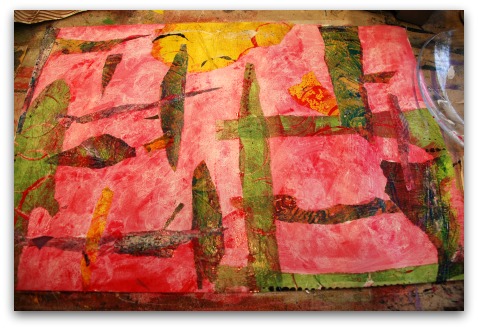 Here I've prepared my watercolor paper by collaging handmade papers and applying washes of red paint. I prefer getting rid of the white background.
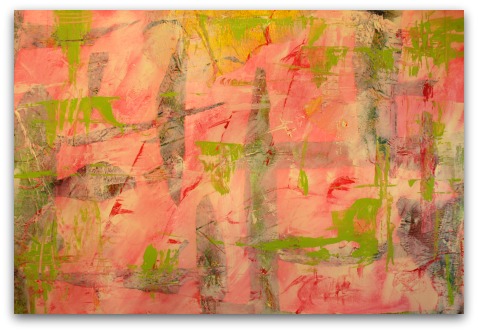 I next applied some opaque warm white paint all over to make it more cohesive. I scratched into the wet paint and added a few small, bold dashes of red, green gold and more warm white. I like the softer look.
Tip: If you want to expand your background texturing skills for projects like this, check out my sponging tutorial here. Or sign up for my free newsletter, The Creative Chronicles for weekly creative content.
Step 3: Compose and Arrange
Pour a small amount of Mod Podge onto a plastic or foam plate. Before you glue a single thing down, lay your images across your dry background.
Move them around like puzzle pieces. Let your intuition guide the layout. You may want one giant focal image in the center surrounded by text, or a fluid, organic scattering of words and colors across the page.
Tip: Use your phone to take a photo of the layout in case things move out of place as you work.
Step 4: Seal Your Vision in Place
Once you love your layout, pick up your 3/4-inch flat brush. Moisten it slightly and blot it well on a paper towel.
1. Brush a thin layer of Mod Podge directly onto the background paper where the image will sit.
2. Press the image firmly into the wet glue, smoothing it out from the center to eliminate air pockets.
3. Immediately brush another layer of Mod Podge directly over the top of the image to seal it.
Don't panic if your magazine pages wrinkle slightly as they dry. This adds wonderful texture and a handmade, mixed-media charm to the finished art piece!
Display Your Art and Celebrate
Here it is finished and simply matted.
No frame required unless you really want to frame it!Once dry, your vision board is ready. You don’t even need an expensive frame; a simple matte board looks clean and professional. Hang your creation in your studio, kitchen, or office. Actually, place it anywhere your eyes will naturally land on it during a busy day.
Using your painting skills to build a beautiful future isn't frivolous; it's incredibly rewarding. Grab your brushes, trust your hands and intuition, and have fun watching your dreams take shape!
More examples...
Here are a couple more so you can get an idea of how limitless the options are!
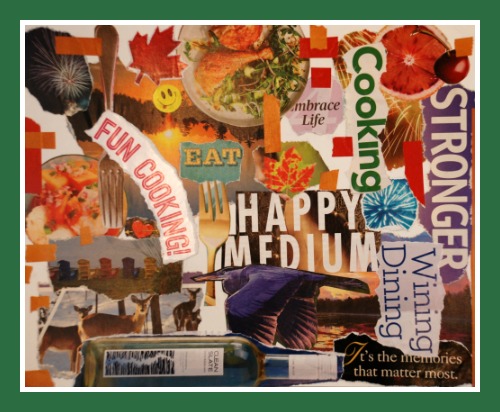 My vision was "make more time for me, my friends and my family."
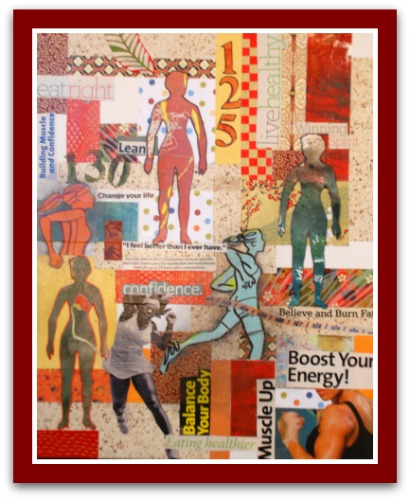 This is my health vision board.
Grow Your Creative Skills Beyond the Board
Creating a vision board is just the start of working with layers, textures, and acrylics. If you loved playing with colors on this project and want to explore other painting opportunities, visit my instructional painting packets page here.
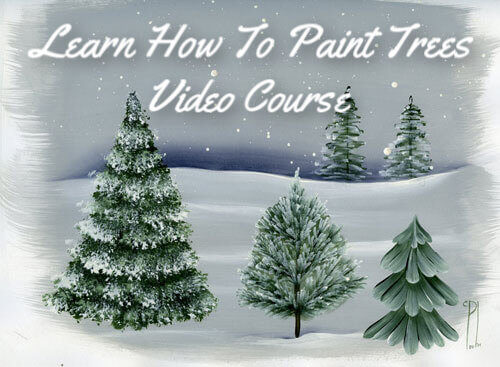
Or you could have a look at my Video Painting Course: Learn to Paint Trees if you'd like to explore something like that.
Let's go from the vision board page back to the Home page.


Cheryl Poulin, CPC, has been helping decorative painters of all levels grow their acrylic painting skills since 1993. She has taught thousands of students, published 50+ instructional packets and videos, and helped revive interest in the decorative art form with a beginner painting program using her step-by-step Earmark Studio Method.
Cheryl’s work has appeared in publications such as: The Decorative Painter, PaintWorks, and Tole World. Cheryl provides your-decorative-painting-resource.com as a free resource. She’s happiest when she sees her students succeed. Cheryl relaxes with a brush in hand, painting, doodling, and creating.
Grow Your Painting Skills With Me
You Can Paint These Trees and More
Get Your Video Course Now
Introductory Price
Save 30% plus
a Money Back Guarantee


You Can Paint These Trees and More
Get Your Video Course Now
Introductory Price
Save 30% plus
a Money Back Guarantee
Recent Articles


-
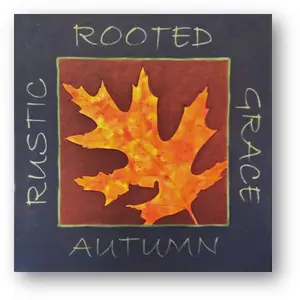
CBP0048 - The Promise of Autumn Pattern Packet
Nov 01, 26 09:36 AM
 Enjoy this quick and fun project featuring background creation with alcohol
-
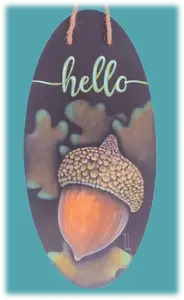
CBP0049 Acorn Hello Sign Pattern Packet
Nov 01, 26 09:11 AM
 The Acorn Hello Sign Pattern Packet can be painted by all skill levels. Just in time for Thanks Giving.
-
Acrylic Paint for Decorative Painting: Selection Guide
Oct 26, 26 10:02 AM
 Struggling with streaky coverage or dull colors? Learn how to choose the right acrylic paint for decorative painting to save time, money, and frustration.
-
How to Paint Galvanized Metal with Acrylics: Complete Prep Guide
Sep 28, 26 01:25 PM
 Stop acrylic paint peeling off galvanized steel! 5-step prep routine decorative painters use to make art stick and how to paint galvanized metal with acrylics.
-
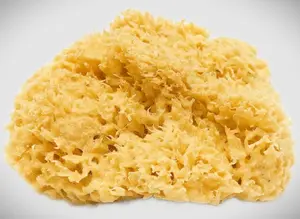
Learn sponge painting techniques to create textured backgrounds.s.
Sep 07, 26 03:21 PM
 Discover positive and negative sponge painting techniques. Use different kinds of sponges for mottling, marbling, and learn easy fixes when you make a mistake.
-
CBP0047 - Sunflower Folly Pattern Packet
Aug 30, 26 02:02 PM
 Increase your painting skills. Enjoy learning the wet dry brush technique in my CBP0047 - Sunflower Folly pattern packet.
-
A decorative painting pattern guide helps you choose what to buy.
Aug 30, 26 09:13 AM
 Use Cheryl Poulin’s ultimate decorative painting pattern guide to discover how pattern packets work for beginners vs. advanced painters! Choose wisely.


Site Search
| site search by freefind | advanced |


You Can Paint These Trees and More
Get Your Video Course Now
Introductory Price
Save 30% plus
a Money Back Guarantee