The
Ultimate
Decorative Painting Pattern Guide
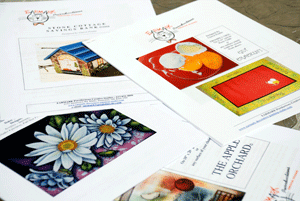
A decorative painting pattern guide
to help you figure out which pattern is right for you
and what you can expect when you get started.
Decorative painting patterns are like blueprints for beautiful art. They take away the guesswork so you can just focus on the joy of painting and creating without having to learn to draw. So, if you’ve ever looked at a beautiful hand-painted piece and thought, "I wish I could do that," I have great news. You can!
That's one of the things I love about decorative painting. You don't have to be able to draw. You don't have to stare at a blank piece of wood or canvas and wonder where to begin. And you certainly don't have to figure everything out by yourself.
That's where a good decorative painting pattern comes in.
A pattern gives you a place to start. It provides the design, the list of colors, the instructions and the information you need to turn a plain surface into something you can be proud of.
I've been using patterns since I started painting in 1991, and I've written quite a few of them myself. So, I know how helpful a good pattern can be.
But I also know there can be a little confusion about what a pattern actually does for you. Let's clear that up.

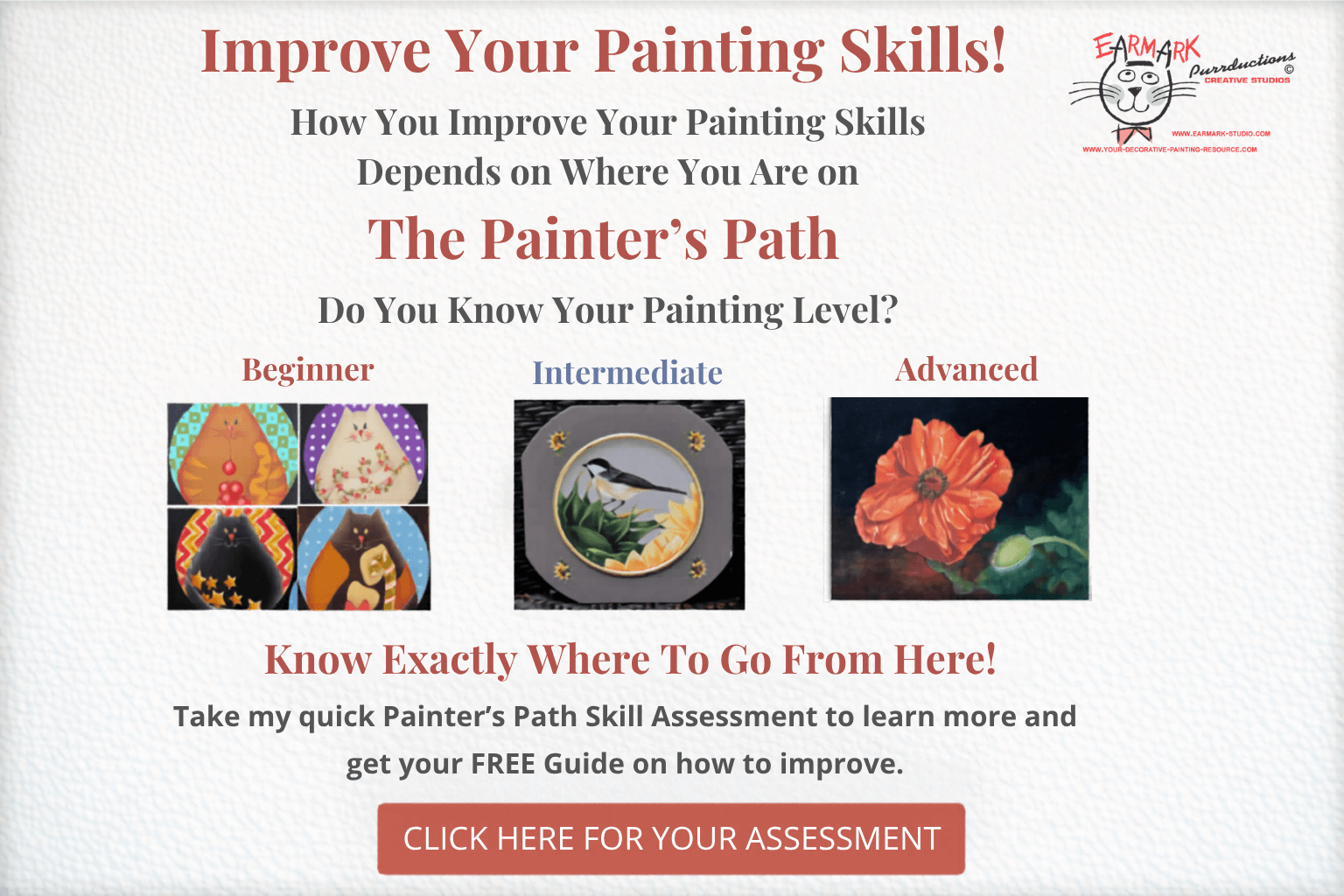
What Is a Decorative Painting Pattern?
You may hear them called decorative painting patterns, pattern packets, painting patterns, tole painting patterns or e-patterns.
The names have changed over the years, but the basic idea hasn't.
A pattern gives you a design to transfer to your surface, along with instructions to help you paint it.
And here's something worth knowing.
The term tole painting originally referred to painting on tin and metal. Today, we use decorative painting as a much broader term because we're painting on just about everything!
Wood. Canvas. Glass. Metal. Clay pots. Furniture. If it will hold paint, somebody is painting it.
What's Included in a Pattern Packet?
Keep reading
the decorative painting pattern guide...
Pattern packets vary from artist to artist, but a good one usually gives you several important pieces of information.
The Traceable Line Drawing
This is the black-and-white drawing of the design. You transfer it to your surface and use those lines as your guide while you paint. That’s why you don’t need to know how to draw. Yeah to that!!
The Supply and Color List
You'll find a list of the paints, brushes and other supplies you'll need. Some artists list specific paint brands and colors. Others give you a little more freedom with color choices.
Pay attention to this information before you start painting. There's nothing worse than getting halfway through a project and discovering you're missing the one color you need! Ask me how I know.
The Painting Instructions
This is where you'll find the step-by-step information for completing the project.
Depending on the pattern and the artist, the instructions can range from very simple to quite detailed.
You’re told where to apply the colors, and where to put the shading, how to highlight an area and which techniques to use. And this brings me to something I want every new painter to understand.
A pattern can tell you what to do. It doesn't always teach you how to do it. That's an important distinction.
If the instructions tell you to "float the shading color," but you've never learned how to float, that one sentence isn't going to teach you the technique. That's not a problem with the pattern. It simply means you need to learn the technique separately.
Color Photographs
Decorative painting packets include photographs of the finished painting. Some include photographs throughout the painting process as well. Use them!
Don't be afraid to stop and compare your painting with the sample as you go along. But please don't use the photograph as a reason to beat yourself up because yours doesn't look exactly the same.
More about that in a minute.
Choosing a Pattern for Your Skill Level
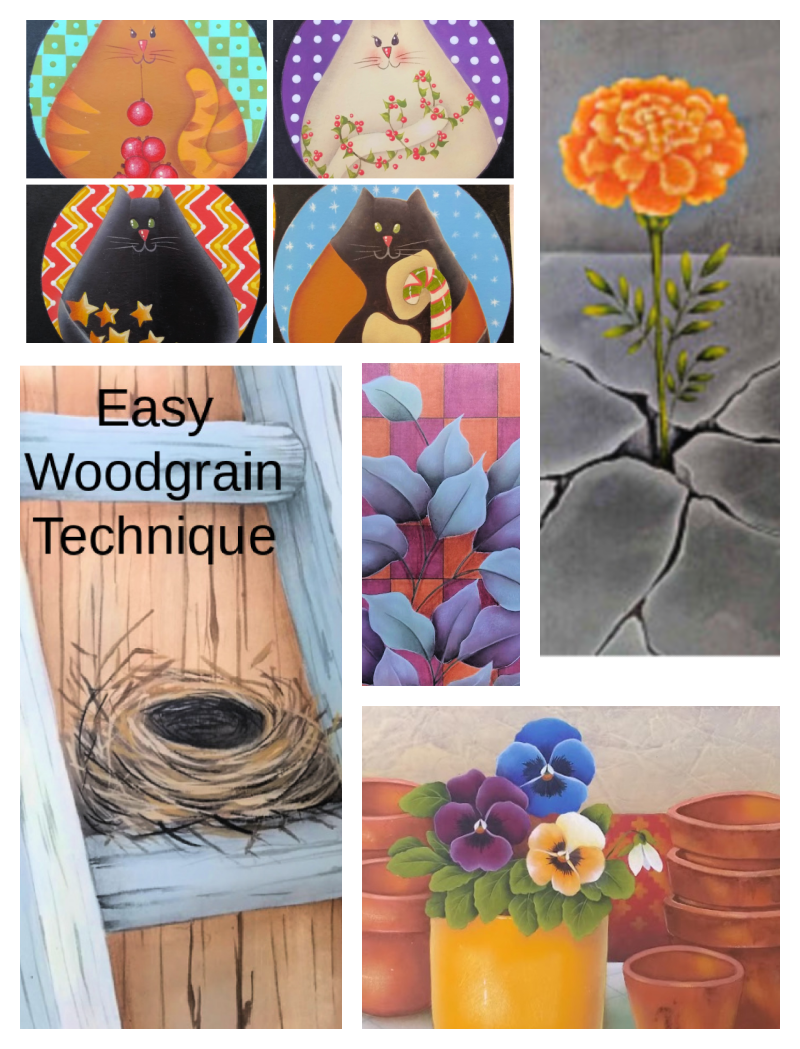
One of the biggest mistakes I see new painters make is choosing a project because they love the finished painting without considering the skill level. I get it.
You've found a gorgeous project and you're thinking, “I want to paint that!”
So, you buy the pattern. Then you discover that the artist expects you to already know how to float, blend, layer and create dimension. Uh-oh. That's when things can go from fun to disappointing.
Beginner Patterns
If you're brand new to decorative painting, look for patterns labeled Beginner or Beginner Plus.
These projects usually concentrate on basic skills such as:
- Base-coating
- Basic brush control
- Simple shading and highlighting
- Basic linework
- Working with paint consistency
They're a great way to build your skills without trying to learn twelve new techniques in one painting.
And please don't underestimate the value of a simple project. A simple design painted well is far more satisfying than an ambitious project that leaves you frustrated.
Intermediate and Advanced Patterns
As your skills develop, you can start choosing projects that ask more of you.
Intermediate and advanced patterns often involve more complicated shading, multiple layers, stronger contrasts and more detailed brushwork.
This is where you'll start seeing techniques such as side-loading, floating, wet-on-wet blending and more complex layering.
And this is also where your pattern becomes more of a roadmap than a set of instructions.
You're expected to bring some skills to the table already.
That's a good thing!
Three Things That Will Make
Your Painting Pattern Experience
Easier
1. Prepare Your Surface
Don't rush this part. If it’s a wood surface, sand and seal it properly. If it’s paper, prime I with gesso. And when you base-coat your background, do it well by taking your time.
A good surface gives your paint something nice to work with, and it makes a difference in how your brush moves across the surface. And it totally affects the finished look.
But I know… you want to get to the fun part. But sometimes the boring stuff is what makes the fun stuff work.
2. Transfer Your Pattern Lightly
When you transfer your line drawing, don't press so hard that you've practically engraved the design into your surface.
A heavy graphite line can be difficult to cover, especially underneath lighter colors.
A light, clean transfer gives you enough information to paint the design without leaving you with a wrestling match later. An eraser can only do so much.
3. Practice the Tricky Parts Before You Commit
If there's a particular brushstroke or technique that makes you nervous, practice it first.
Use a piece of paper or another scrap surface. I recommend using a small art journal to record your practice sessions. It’s fun to look back on your progress over the weeks, month… even years!
Try the stroke. Try it again. Try changing the pressure. Try changing the amount of paint on your brush.
This is one of the simplest ways to take some of the fear out of a new technique.
And here's the thing. You don't have to get it right the first time. You're practicing. That's what practice is for!
What If Your Painting
Doesn't Look Like the Sample?
This is where I want you to take a deep breath. Your painting isn't supposed to look exactly like mine. Or anyone else's.
Your brush pressure is different. Your paint consistency is different. Your hands are different. Your interpretation is different. And that's okay.
When you're learning, following the pattern closely is a good idea. It gives you the opportunity to practice the techniques and see how the artist approached the project.
But as you gain experience, you can start making some of your own choices.
Change a color. Try a different background. Make something warmer. Soften a shadow. Strengthen a highlight. Leave out a detail you don't care for.
That's called artistic license. And I love it.
Learn the Technique Before You Change the Technique
There's one little caution I want to add here. Don't change something simply because you haven't figured out how to do it yet.
If your float isn't working, changing the color won't solve the problem. Practice the float.
If your shading looks muddy, don't immediately decide that the pattern is wrong. Take another look at your paint consistency and your brush.
Sometimes the answer isn't to change up the project. Sometimes the answer is to work on the skill.
And there's no shame in that. I've been painting for more than 30 years, and I'm still learning. That's part of being a painter. And it will always be that way.
Eventually, Make the Painting Yours
This is the part that gets really exciting. Once you understand the techniques and you're comfortable with your brushes, you don't have to follow every instruction as though it's written in stone. The pattern gives you a starting point.
You get to decide where you go from there. Maybe the original design uses red flowers, but you see them in purple. Paint them purple.
Maybe the background feels too light for your taste. Change it.
Maybe you want to add a little extra detail. Go ahead.
The more you understand about color, value, light and shadow, the more confident you'll become in making those choices. And that confidence doesn't arrive all at once. It builds one painting at a time.
A Decorative Painting Pattern Is a Beginning
That's really what I want you to take away from all of this.
A decorative painting pattern isn't a skill test. You don't get a extra points because your painting looks exactly like the sample.
It's a tool. Use it to learn. Use it to practice. Use it to try something you've never painted before.
And if you're a beginner, don't expect yourself to paint like someone who's been doing this for 20 or 30 years. That's not a fair comparison.
Give yourself permission to be new at something. Let mistakes be part of the learning process. Paint something that isn't perfect because there is no such thing as a perfect painting.
Every time you pick up that brush, you're learning something. And, eventually, you'll look at a pattern and understand what the artist is asking you to do.
And that's when you know you're growing. You're no longer just following a pattern. You're becoming a painter.
So, pick a pattern you love. Gather your brushes. Put on some music. And paint.
You can have a look at my growing collection of pattern packets here.
Let's go back to the HOME page.

Cheryl Poulin, CPC, has been helping decorative painters of all levels grow their acrylic painting skills since 1993. She has taught thousands of students, published 50+ instructional packets and videos, and helped revive interest in the decorative art form with a beginner painting program using her step-by-step Earmark Studio Method.
Cheryl’s work has appeared in publications such as: The Decorative Painter, PaintWorks, and Tole World. Cheryl provides your-decorative-painting-resource.com as a free resource. She’s happiest when she sees her students succeed. Cheryl relaxes with a brush in hand, painting, doodling, and creating.
Grow Your Painting Skills With Me
You Can Paint These Trees and More

Get Your Video Course Now
Introductory Price
Save 30% plus
a Money Back Guarantee


You Can Paint These Trees and More
Get Your Video Course Now
Introductory Price
Save 30% plus
a Money Back Guarantee
Recent Articles


-
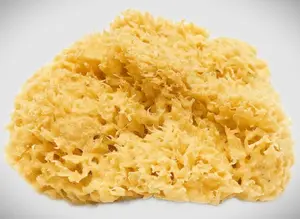
Learn sponge painting techniques to create textured backgrounds.s.
Sep 07, 26 03:21 PM
 Discover positive and negative sponge painting techniques. Use different kinds of sponges for mottling, marbling, and learn easy fixes when you make a mistake.
 -
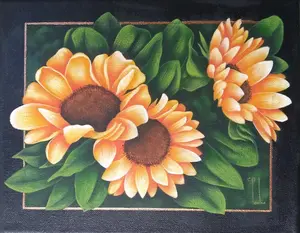
CBP0047 - Sunflower Folly Pattern Packet
Aug 30, 26 02:02 PM
 Increase your painting skills. Enjoy learning the wet dry brush technique in my CBP0047 - Sunflower Folly pattern packet.
 -
A decorative painting pattern guide helps you choose what to buy.
Aug 30, 26 09:13 AM
 Use Cheryl Poulin’s ultimate decorative painting pattern guide to discover how pattern packets work for beginners vs. advanced painters! Choose wisely.
 -
Learn how to use a liner brush for swirls and smooth curlicues.
Aug 22, 26 02:52 PM
 Ever painted a curlicue that suddenly turned into a skinny worm with a kinked body? I'll show you how to use a liner brush for swirls you'll be proud of.
 -
Ugly stage of a painting, it happens. Don't shelve your project yet.
Jul 19, 26 08:10 AM
 It's a frustrating thing but it's to be expected. The ugly stage of a painting simply means you're about halfway through your project. Take heart and keep going!
 -
is decorative painting still popular
Jul 06, 26 10:32 AM
 Hobbyists are asking, is decorative painting still popular? Yes but it has changed quite a bit.
 -
CBP0046 The Dance of the Dragonflies
Jun 20, 26 01:51 PM
CBP0046 The Dance of the Dragonflies provides a creative design for all painting skills including beginners.


Site Search
| site search by freefind | advanced |


You Can Paint These Trees and More
Get Your Video Course Now
Introductory Price
Save 30% plus
a Money Back Guarantee